
If you want to foam roll tight hips and calves but keep putting it off because it feels like another thing that takes forever, I wrote this for you. I am a realtor with six kids. My days start before 7am and usually do not stop until well past 9pm. Between back-to-back showings, school pickups, and squeezing in a workout wherever I can find twenty minutes, my hips and calves take a beating every single day. By the time I get home, my hip flexors feel like two knotted ropes and my calves are so tight I can feel them pulling with every step up the stairs. The only gear you need is a decent foam roller. I use a 321 Strong foam roller, and I will show you exactly how I use it.
I spent a long time thinking foam rolling was something you needed a gym membership and a dedicated stretching session to pull off. Turns out you need about ten minutes and a decent roller. The routine I am going to walk you through is what I actually do most nights, usually on my bedroom floor before I get in the shower. It targets the areas that get destroyed from standing, walking, and sitting all day: the outer hips, hip flexors, IT band, and calves. You do not need to be flexible. You do not need a trainer. You just need a flat piece of floor and five minutes to read this.
Your hips and calves are tighter than they should be. Here is the roller that fixes that.
The 321 Strong Foam Roller is the one I use every night. Medium density means it gets into the tissue without feeling like you are rolling on a pipe. Over 41,000 reviews, budget-friendly pricing. It is the first thing I would tell a friend to buy.
Amazon Check Today's Price on Amazon →Step 1: Set Up Your Space and Give Yourself Two Minutes to Breathe
Before you put any pressure on tight tissue, your nervous system needs to know you are not in a crisis. I know that sounds fancy, but it is just this: if you drop onto a foam roller while you are still keyed up from a long day, your muscles are going to fight back. Your body guards tight spots when it perceives threat. A couple of slow, deliberate breaths before you start makes every step after this one more effective.
Grab your foam roller and find a flat surface. Hardwood floors work better than carpet for this because the roller stays stable and you get better control over your body weight. If you only have carpet, that is fine, but plant your hands and feet firmly. Wear whatever you have on, or change into workout clothes if that helps you actually do this instead of promising yourself you will do it tomorrow. I keep my roller next to my nightstand so I literally trip over it if I try to skip.
Take three slow breaths, inhale through your nose for four counts, exhale through your mouth for six. That is it. You are ready. The whole warm-up took thirty seconds.
Step 2: Outer Hip and IT Band (2 Minutes Per Side)
The outer hip and IT band are where most of the damage happens when you walk or stand all day in shoes that are not built for it. For me, this is the spot that lets me know exactly how bad the day was. If I showed six properties and drove forty minutes between each one, the outside of my left hip is furious by 8pm.
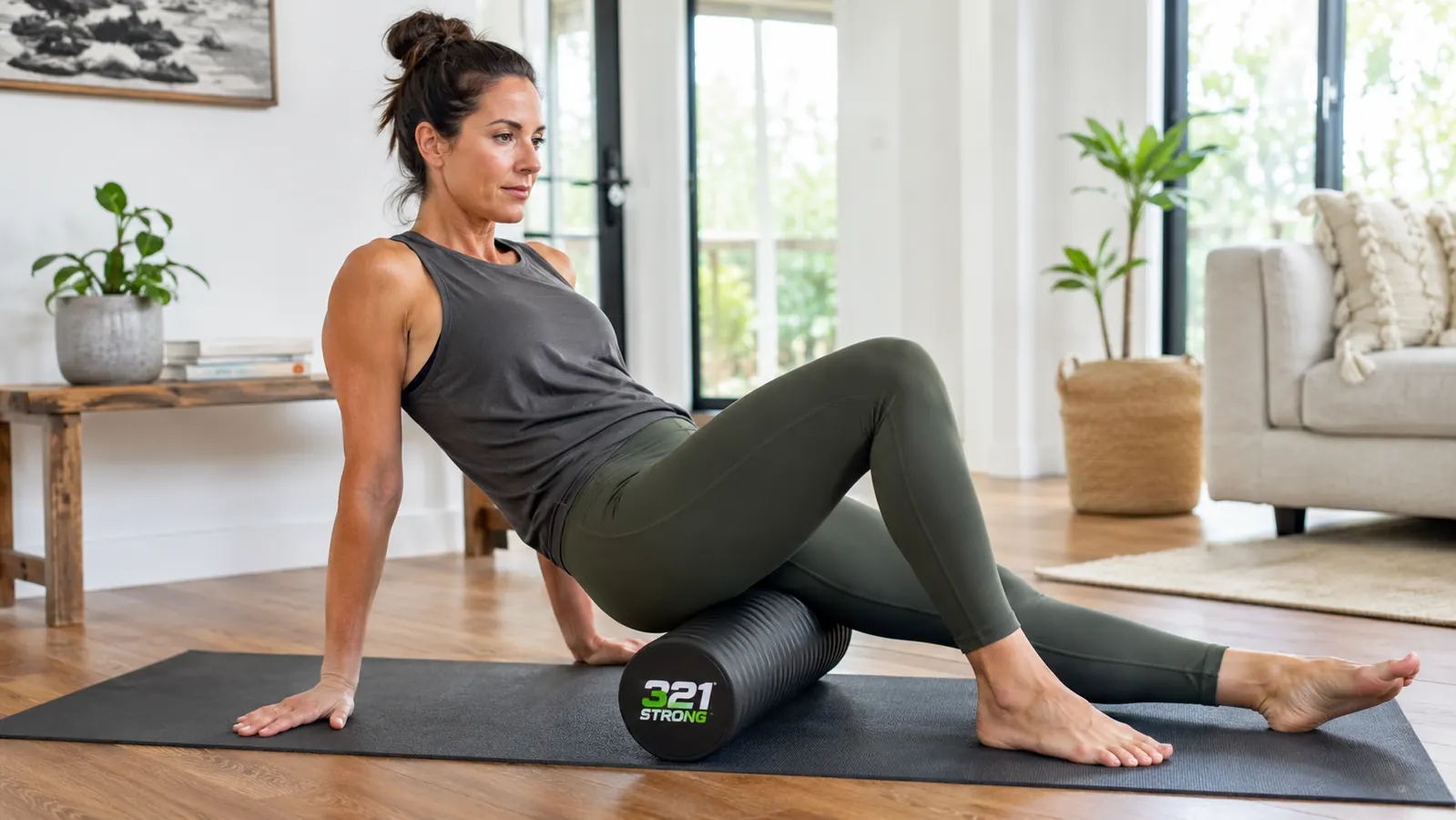
Sit on the floor and place the 321 Strong roller under the outside of your right hip. Prop yourself up on your right forearm, stack your left leg in front for balance, and let your body weight sink into the roller. Do not brace against it. The point is to let the tissue compress and release. Slowly roll from the top of your hip down toward the outside of your knee and back up. Move about an inch per second. When you hit a spot that makes you want to curl into a ball, stop there. Hold steady pressure on that point for ten to twenty seconds, breathing through it. That is a trigger point releasing, and it is supposed to feel exactly like that.
Do two full minutes on the right side before switching to the left. If two minutes feels like a long time, you needed this more than you thought. The 321 Strong's medium density is the reason I can tolerate the full two minutes per side. I tried a harder roller once and quit after thirty seconds because it felt like pressing a bruise.
Step 3: Hip Flexors (90 Seconds Per Side)
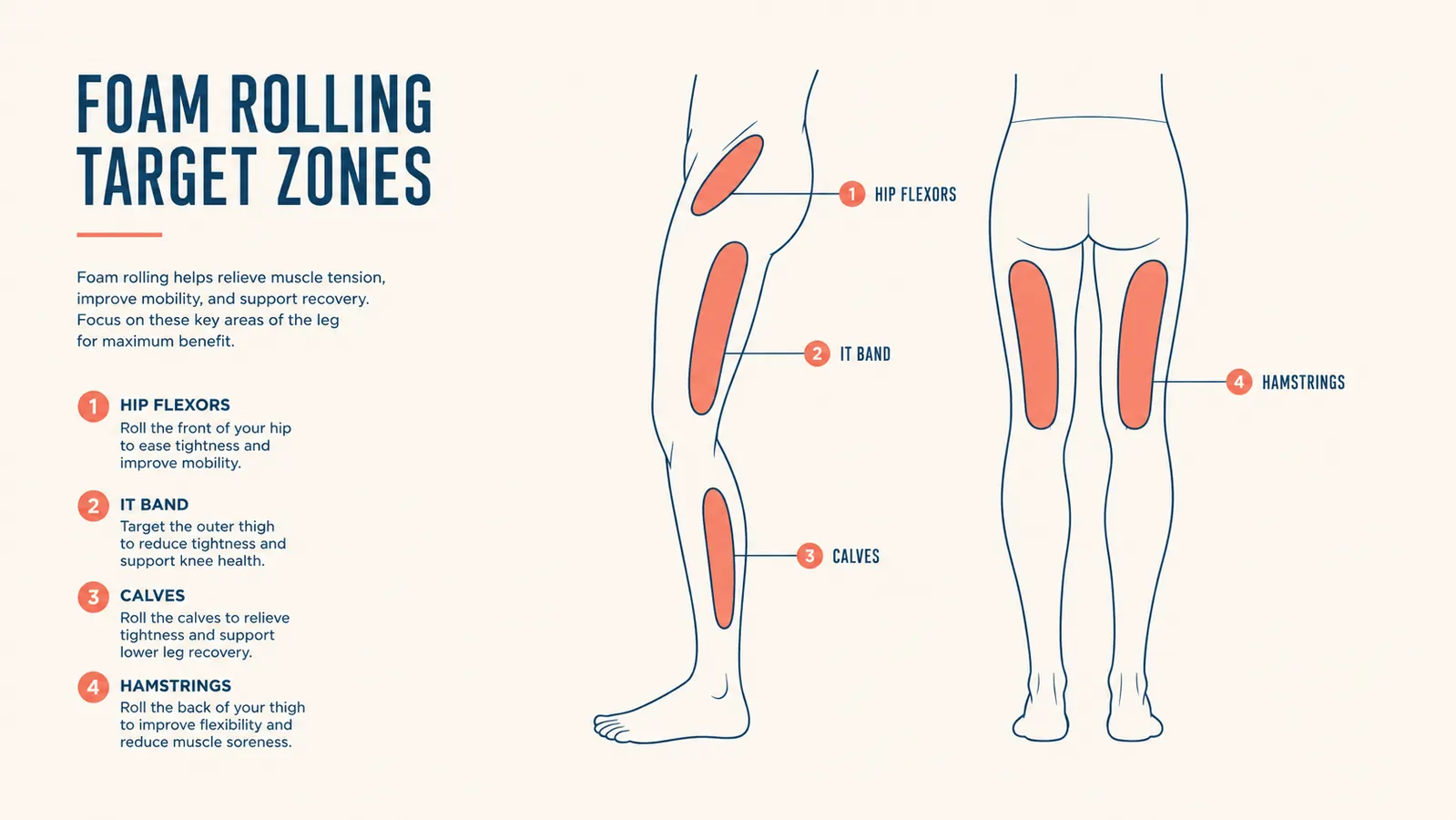
Hip flexors are the muscles that run from your lower back down through the front of your hips. They get shortened and tight when you sit in a car between showings, sit at a desk writing contracts, or spend time in any position where your knees are above your hips. If the lower back of your back aches at the end of the day, tight hip flexors are often contributing to it.
For this step, flip to your stomach. Place the roller horizontally just below your right hip bone. You are going to prop yourself up on your forearms like a plank position and let your right hip sink into the roller. Keep your core lightly engaged so your lower back is not arching dramatically. Now slowly shift your weight forward and back, letting the roller move from just below the hip bone toward the top of your quad. This is a smaller movement than the outer hip pass, only two or three inches in each direction.
If you find a tender spot, pause on it and breathe. The discomfort here can be more intense than the outer hip because the hip flexor is a deep muscle. Ninety seconds per side is enough. If you only have time for one step on a really hectic night, make it this one or the outer hip. These two zones together account for most of the stiffness people feel from being on their feet all day.
I also do this step in hotels when I am traveling for work. I put the roller in my carry-on bag because it is exactly 13 inches, which fits in the overhead bin. Five minutes on the hotel room floor beats waking up stiff in an unfamiliar bed.
Step 4: Calves (2 Minutes Per Side)
Calves are the most overlooked recovery zone for people who are on their feet all day. They are working constantly, whether you are walking, standing, or even sitting with your feet flat on the floor. By the end of a full day of showings, my calves feel like two tight fists that will not open. Rolling them out before bed means I wake up in the morning without that immediate tightness when I step down.
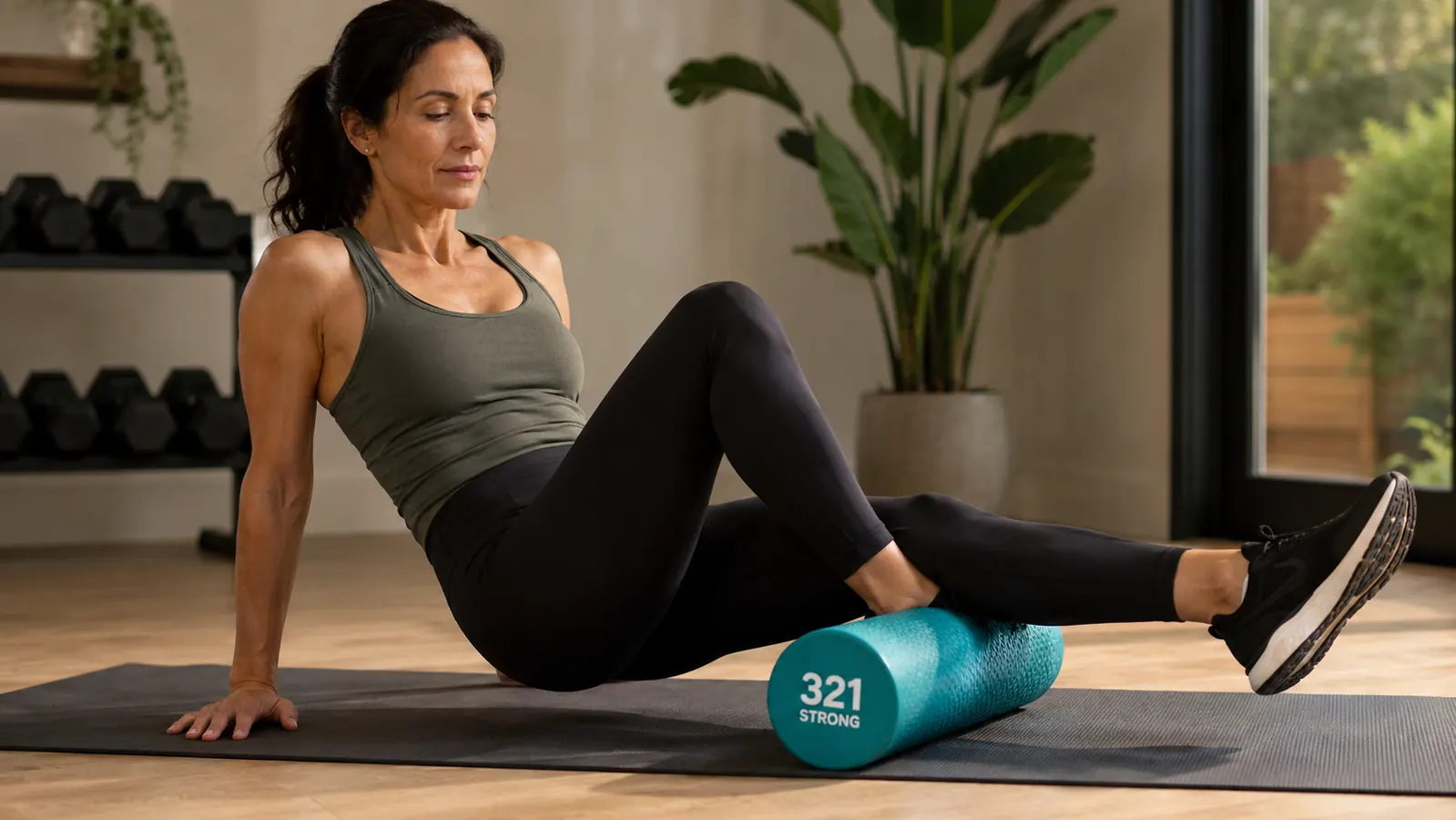
Sit on the floor with your legs out in front of you. Place the foam roller under your right calf, just above the ankle. Prop yourself up on your hands behind you and lift your hips slightly off the floor so some of your body weight transfers down through your calf into the roller. Now slowly roll from just above the ankle up to just below the back of the knee. Move slowly. When you find a tight spot, pause and hold for ten to fifteen seconds, just like the hip work.
To increase the pressure, cross your left ankle over your right shin. This adds your left leg's weight to the pressure on the roller, which gives you more intensity without needing a harder roller. I do this for the bottom half of my calf near the Achilles area, which tends to be tighter for me from wearing heels during showings. Switch legs and repeat. Two minutes per side. You will feel the difference the next morning.
Step 5: Finish with a 60-Second Static Hip Stretch
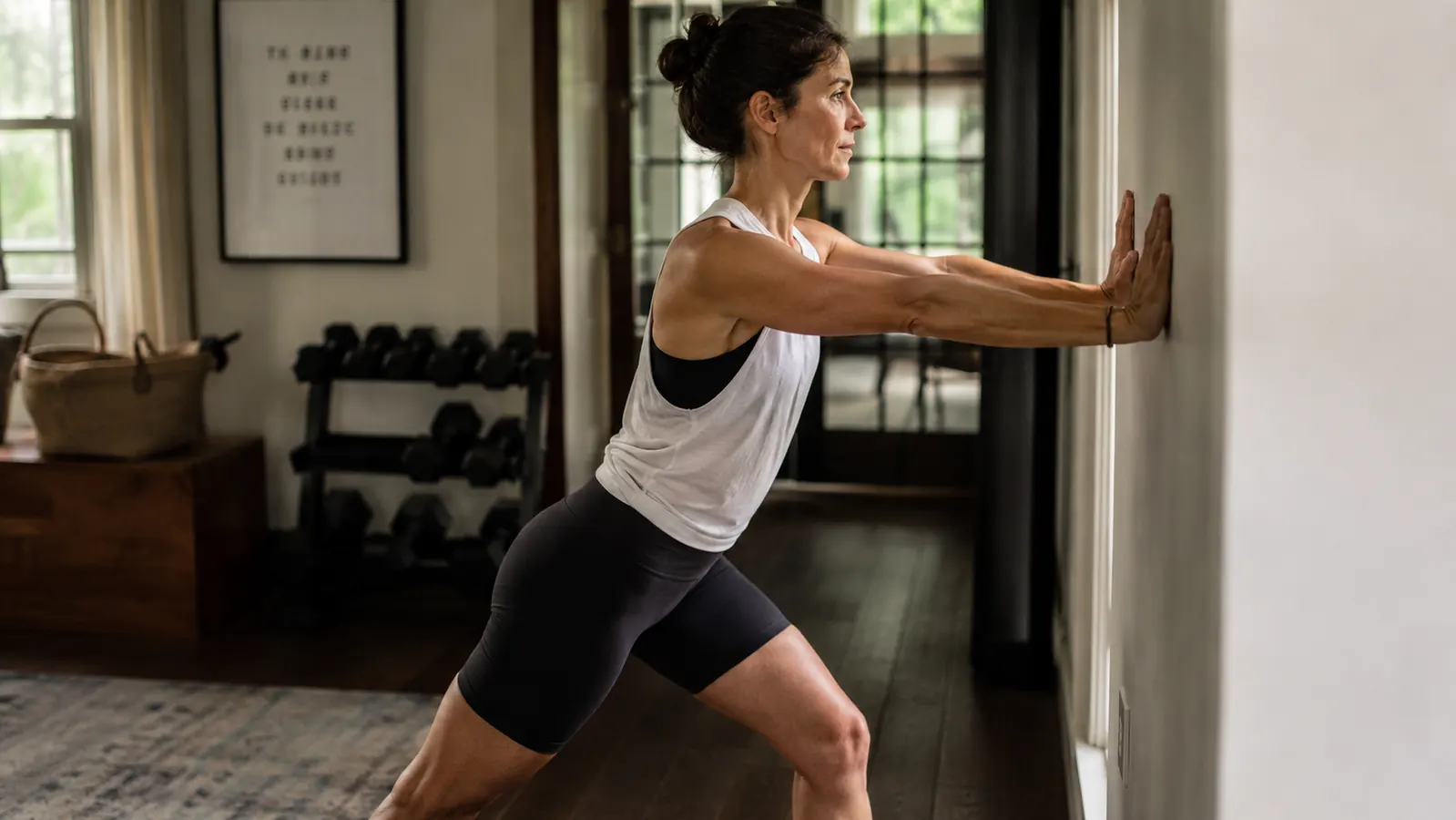
Foam rolling loosens the tissue. A static stretch after rolling tells the muscle to stay at that new length instead of snapping back to where it was. This last step takes sixty seconds and it is the reason the benefits from the rolling actually carry over into the next day. Skip it if you want, but the results will not stick as well.
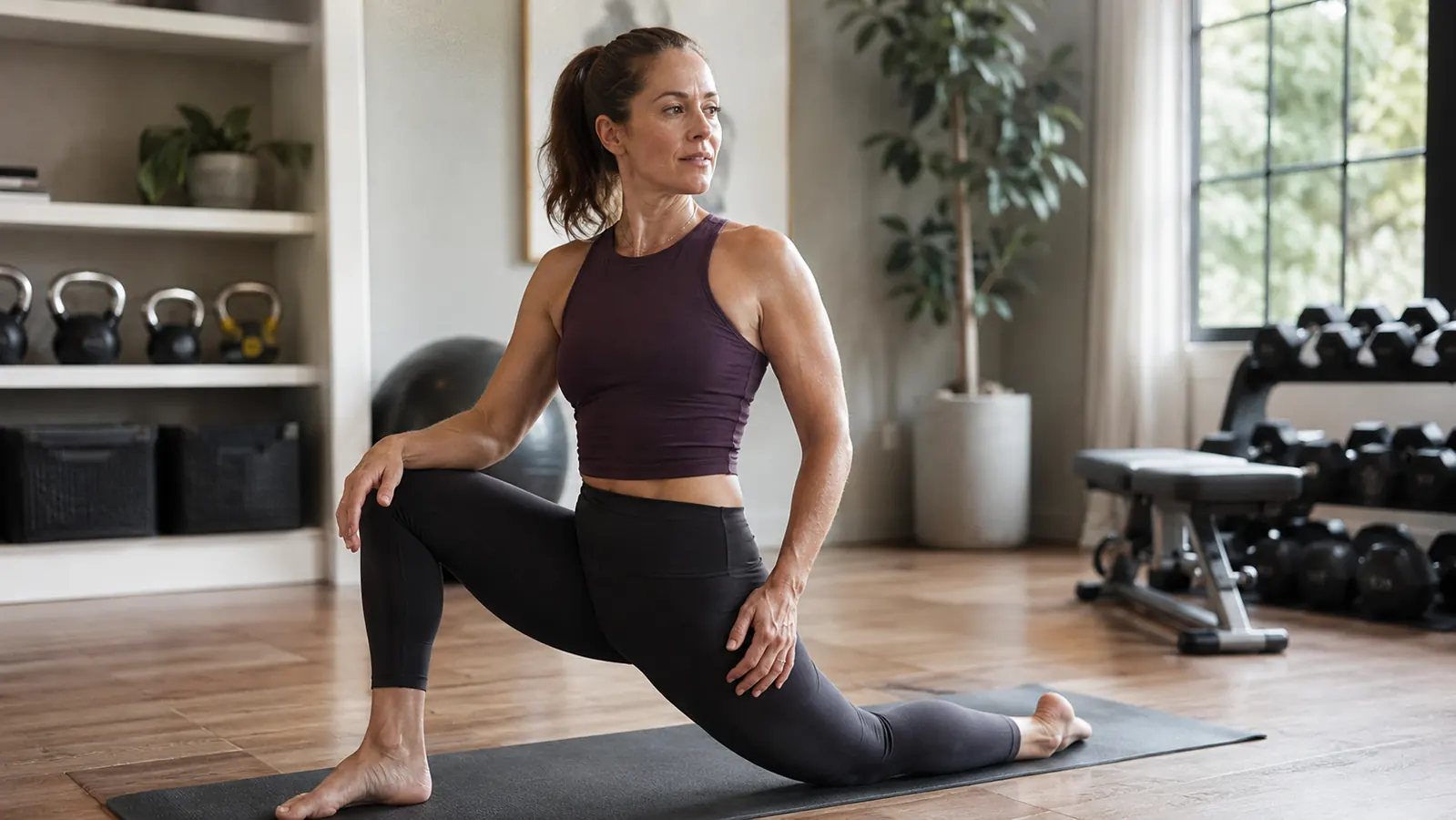
Come into a low lunge with your right knee on the floor and your left foot forward. Sink your hips toward the floor and hold that position for thirty to forty seconds. You should feel the stretch deep in the front of your right hip, the same tissue you just rolled. If you want more intensity, reach your right arm up overhead and lean slightly to the left. Switch sides. That is it. The whole routine, all five steps, clocks in right at ten minutes when you move through it without stopping.
I have done this routine at 10pm on the floor next to my bed. I have done it in hotel bathrooms. I have done it in the break room at my office between appointments when my hips were so stiff I was limping. The location does not matter. What matters is that the 321 Strong roller goes with me because it is the only recovery tool I have used consistently for more than two weeks.
What Else Helps
Foam rolling works best when it is part of a small collection of consistent habits rather than a one-time fix. A few things I stack with this routine that have made a noticeable difference: drinking an extra glass of water in the hour before bed, because dehydrated tissue is tighter tissue. Taking magnesium glycinate about an hour before sleep, which has helped with overnight muscle cramps that used to wake me up in the middle of the night. And wearing supportive shoes during long work days instead of flats that look better but wreck my feet by noon.
If your calves or hips are significantly sore or painful, not just tight, that is a different conversation and one worth having with a physical therapist or doctor. Foam rolling is a recovery tool, not a medical treatment. What it is very good at is reducing the day-to-day tightness that builds up from repetitive movement and long periods on your feet. For that specific problem, it is one of the most effective things I have found that does not require a gym visit, a scheduled appointment, or more than ten minutes.
For more on why foam rolling works at a physiological level, the article on 10 reasons foam rolling speeds recovery goes deeper into the research. And if you want a full breakdown of the tool I use for this routine, the 321 Strong foam roller review covers it in detail, including what I like, what I wish were different, and who I think it is best for.
I have done this routine at 10pm on the floor next to my bed and in hotel bathrooms between work trips. The location does not matter. Ten minutes is ten minutes.
If you are going to do this routine, you need a roller that is actually worth doing it on.
The 321 Strong Foam Roller is medium density, 13 inches long, and holds up to daily use without going soft. It is the one I reach for every night. Check the current price on Amazon before it changes.
Amazon Check Today's Price on Amazon →