
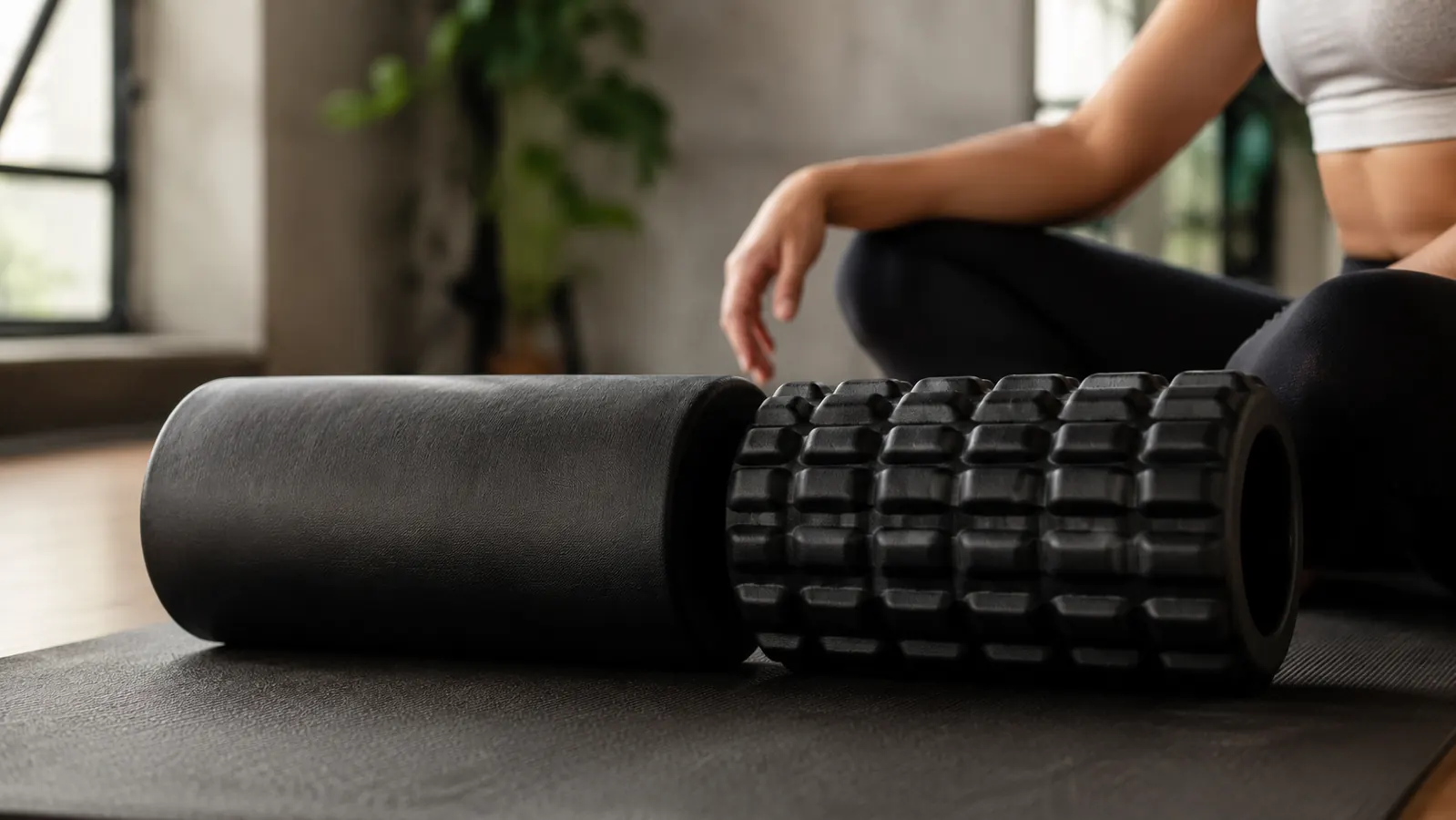
Somebody in my spin class mentioned the TriggerPoint Grid about six months ago and I nodded like I knew exactly what she was talking about. I did not. At that point I was using a cheap knock-off roller I bought at a pharmacy that had gone completely flat in under two months. So I went home that night, opened a browser tab, and landed in the middle of the exact debate you are probably having right now: the budget 321 Strong Foam Roller, or the premium TriggerPoint GRID. Both show up at the top of every search. Both have thousands of reviews. And they do not look that different in the photos.
I am Loretta. I sell real estate, I have six kids at home, and I am on my feet six to eight hours a day. I do not have time for a 45-minute deep dive at the foam roller store. I needed the right one, and I needed to make that call fast. Here is everything I figured out, including where I landed and why.
| 321 Strong Foam Roller | Trigger Point Grid | |
|---|---|---|
| Price | Mid-range | Check today's price on Amazon |
| Density | Medium (firm but with give) | Medium-firm (denser core, less give) |
| Surface Texture | Multi-ridge ridged grid pattern along full length | Patented GRID pattern with three distinct surface zones (flat, ridged, grooved) |
| Length | 13 inches | 13 inches |
| Weight | 1.2 lbs | 1.3 lbs |
| Core Construction | Solid EPP foam (no hollow core) | Hollow ABS plastic core with foam sleeve |
| Included Extras | 4K digital eBook with rolling routines | Online instructional library access |
| Warranty | 1 year | 1 year |
| Available Sizes | 13-inch only | 13-inch and 26-inch |
Where the 321 Strong Wins
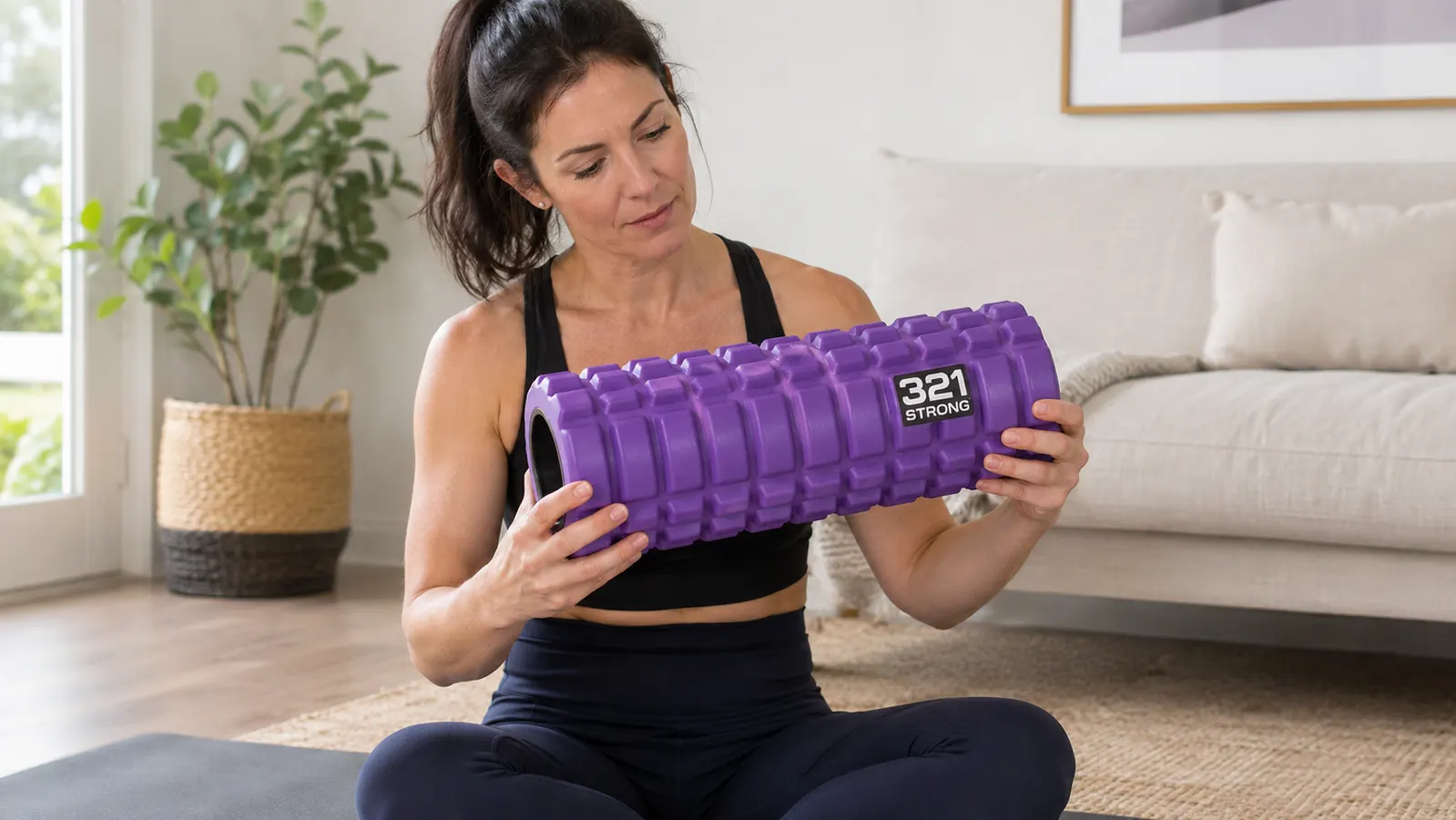
The most obvious win is the price. At a budget-friendly rate, the 321 Strong costs less than half of the TriggerPoint Grid. That matters for two reasons. First, it means you can actually buy it right now without overthinking whether the thing is going to collect dust. Second, it means if you leave it in a hotel gym, which I have done, you are annoyed but not seriously annoyed. The 321 Strong travels with me consistently because I am not precious about it.
The construction is also more forgiving than I expected. The 321 Strong is built on a solid EPP foam core, which means it holds its shape under body weight without that hollow wobble you get with some budget rollers. I have been using mine on calves, IT band, and upper back several times a week for months and it has not flattened or cracked. The medium density is the real sweet spot for most people. It is firm enough to actually do something, but not so aggressive that you dread using it. That matters if you are squeezing this into ten minutes before bed rather than doing a full spa-style session.
The included eBook with targeted rolling routines is genuinely useful for beginners. When I handed a roller to my oldest daughter, who had been complaining about shin splints from cross-country practice, she actually used the guide and figured out what she was doing in one evening. The TriggerPoint has a digital resource library too, but you have to go find it. The 321 Strong puts it front and center in the box.
Where the TriggerPoint GRID Wins
Honesty first: the TriggerPoint GRID is a genuinely well-made product. The three-zone surface pattern gives you more options on a single pass. The flat band mimics a therapist's palm, the raised grid mimics fingertips, and the grooved channel gives your spine or Achilles a place to rest without direct pressure. If you are working on precision trigger point release rather than general rolling, those distinctions matter. I noticed it particularly on my upper back, where the grooved channel let me roll along either side of the spine without sitting directly on the vertebrae.
The hollow ABS plastic core also means the TriggerPoint holds up under heavier athletes without any flex or give that could reduce pressure. If you are over 200 pounds and rolling aggressively, that firmer feel under body weight is perceptible. For my 145-pound frame, I did not feel a meaningful difference between the two on most muscle groups, but I can see why a bigger athlete or someone with seriously knotted tissue might prefer the rigid feel.
Your calves and hips are waiting. The 321 Strong ships in two days.
The 321 Strong Foam Roller has over 41,000 ratings and costs less than a single co-pay. It is the one I actually use every week, and it is the one I recommend to people who want results without the premium price.
Amazon Check Today's Price on Amazon →The TriggerPoint is a fine roller. But I have six kids, a full showing schedule, and a budget. The 321 Strong does 90 percent of what the GRID does for half the price, and I have used it nearly every day for six months without a single complaint.
How They Feel in Real-World Use
I tested both rollers for three weeks before writing this. Mornings before showings, evenings after long days on my feet, once in a hotel room in Nashville after flying in for a training conference. Here is the honest breakdown by body area.
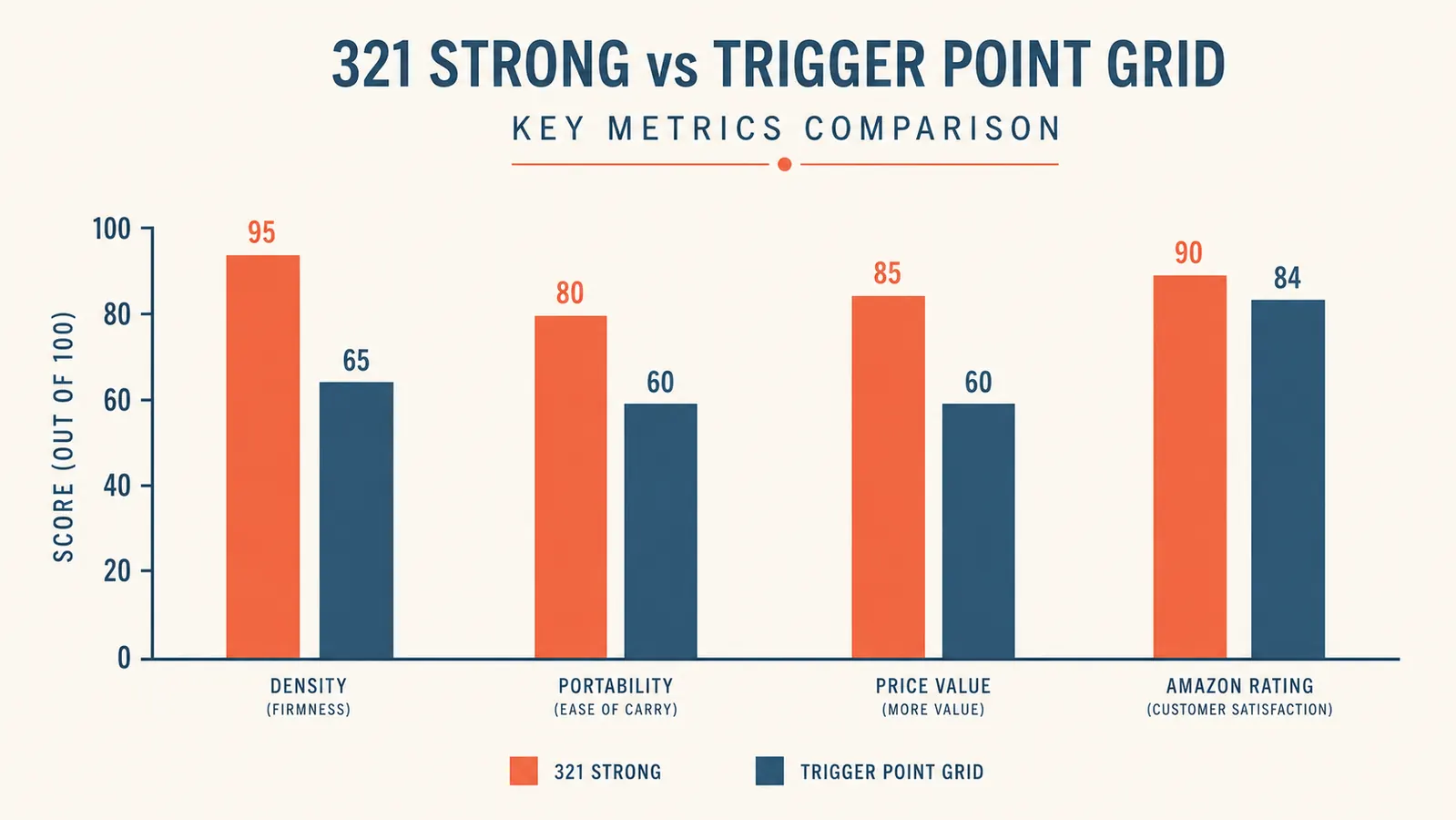
On calves and IT band: nearly identical results. Both rollers hit the tissue effectively and I noticed the same level of relief after two or three minutes per side. The TriggerPoint felt marginally more targeted when I hit a specific knot, but the difference was small enough that if you had not used both back-to-back, you would not notice.
On upper back: the TriggerPoint's grooved channel gave it a slight edge here. Rolling thoracic extension over the 321 Strong worked fine, but I had to be more deliberate about keeping the roller off my spine directly. The GRID's center groove handled that automatically. If upper back is your main problem area, this is worth knowing.
On quads and hamstrings: the 321 Strong wins on comfort and consistency. Its medium density lets you sustain pressure long enough to actually work through a tight quad without white-knuckling it. The GRID felt borderline too firm for a sustained pass on the quads, especially if you are already sore. I had to prop on my elbows more to bleed off pressure, which gets tiring fast.
Portability: both are 13 inches and weigh just over a pound. They fit in the same carry-on pocket and neither caused issues at airport security. Slight edge to the 321 Strong on packing because the solid core has no risk of cracking under luggage weight, whereas the TriggerPoint's hollow core gave me mild anxiety the first time I checked a bag with it.
Who Should Buy Which
Get the 321 Strong if you are new to foam rolling, if you roll mostly for general soreness relief, if you are budget-conscious, or if you want something you can throw in a bag without stressing over it. It covers everything a non-specialist needs: calves, IT band, hamstrings, quads, and mid-back. The medium density is approachable enough that you will actually use it consistently, which is the only metric that matters. And at a modest price, you can try it, decide foam rolling is not your thing, and not feel like you made a costly mistake.
Get the TriggerPoint GRID if you are an experienced foam roller with specific problem areas, particularly the upper back or tight lumbar region. If you are a heavier athlete who needs a firmer surface, or if you are already using a roller regularly and want to upgrade the precision of your sessions, the GRID's three-zone surface delivers something the 321 Strong cannot fully replicate. Just know you are paying double for a fairly incremental improvement in most use cases.
For most of the people I know, including a colleague at my brokerage who was skeptical of foam rolling entirely, the 321 Strong is the right call. She has been using it for a month now and her IT band situation has improved noticeably. She did not need the TriggerPoint to get there. She needed a good, honest, approachable roller she would actually put on the floor and use. That is what the 321 Strong is.
A Note on Durability
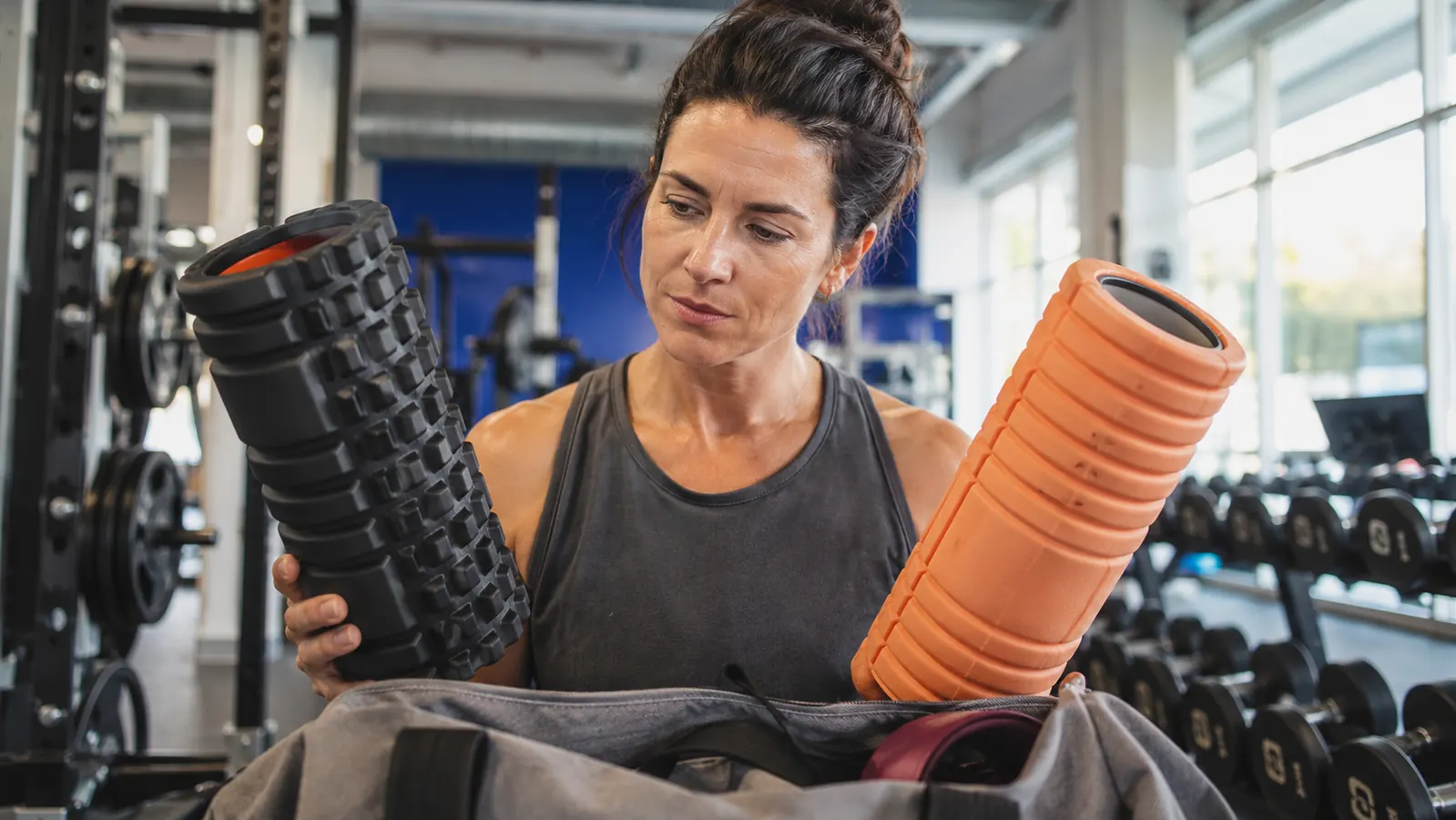
A frequent concern I see in both roller comment sections: will it hold up? With the 321 Strong, the solid EPP foam core is the key factor. EPP does not compress permanently under normal use the way cheap open-cell foam does. I have seen budget rollers go flat in six weeks. My 321 Strong has not changed shape or firmness after consistent use. The outer texture shows minor scuffs after being thrown in a gym bag, but the structure is intact.
The TriggerPoint has a similar track record in the reviews for longevity, and its hollow core construction is more common in higher-end rollers. The foam sleeve over the plastic core can theoretically delaminate over years of use, but I have not personally experienced that. Both come with a one-year warranty, so if something fails in that window, you are covered on either choice.
Bottom Line
I wanted to give you a clear answer here, not a hedge. The 321 Strong Foam Roller wins this comparison for the majority of people. It does the job, it holds up, it travels easily, and it costs less than a single massage co-pay. The TriggerPoint GRID is a genuinely good product with a few real advantages for advanced users, but those advantages do not justify double the cost for most people who are simply trying to be less sore after a long week.
If you are on the fence, start with the 321 Strong. Foam rolling is a habit, and habits are easier to build when the tool does not feel like an investment you need to protect. Get it, use it three or four times a week for a month, and I think you will have your answer. You can always upgrade later if you want more precision. But most people I know who bought the 321 Strong never felt the need to.
Ready to stop putting off recovery? The 321 Strong is the place to start.
Over 41,000 Amazon reviews and counting. Medium density, solid construction, and a digital guide included so you know exactly what to do with it. Check the current price below.
Amazon Check Today's Price on Amazon →