

My left knee started complaining about two years ago, right in the middle of a boot camp class at the gym two blocks from my office. Sharp little ping on the inside of the knee during a lateral lunge. I shook it off, finished the class, and limped to my car. Classic move, right? The thing about knee pain is that it doesn't care how busy you are or how much you've already rearranged your week to make that one workout happen. It just shows up and waits.
I'm a realtor. I walk houses for a living, often eight to twelve in a day when the market gets active. I also have six kids and I travel for work at least twice a month. Stopping workouts entirely wasn't an option I could afford, mentally or physically. So I had to figure out how to keep moving without making things worse. This is the actual routine I landed on, and the one tool that made the biggest difference right away.
If your knees are holding your workouts hostage, compression support is where to start.
The Modvel Compression Knee Brace comes in a 2-pack with 78,000-plus reviews and a 4.4-star rating. I keep one in my gym bag and one at home. They run budget-priced for both, which made it easy to try without a big commitment.
Amazon Check Today's Price on Amazon →Step 1: Fix Your Warm-Up Before You Touch a Weight
Most of us do exactly nothing to warm up before a workout. We maybe do a lap on the treadmill and call it ready. But a cold, stiff knee that you immediately load with squats or lunges is practically asking for trouble. The synovial fluid that keeps your knee joint moving smoothly needs time and gentle motion to circulate before you pile weight onto it.
My warm-up now takes about eight minutes and I treat it like a non-negotiable. I start with five minutes of brisk walking or easy cycling to get blood moving. Then I do a set of ten leg swings on each side, ten slow bodyweight squats to just half depth, and ten straight-leg raises lying flat on my back. That sequence wakes up the quad and gets the knee joint tracking smoothly before any real load hits it. Every orthopedic PT I've spoken to says this warm-up protocol alone reduces the chance of sharp knee pain during the session itself.
One thing worth naming: if your knee aches every single morning when you get out of bed, or if it's swollen at rest, that's a conversation for your doctor rather than a warm-up fix. The approach I'm describing here is for the person whose knee grumbles during and after workouts but is otherwise functional. Know the difference.

Step 2: Modify Your Movements Instead of Eliminating Them
There's a kneejerk reaction, forgive the pun, to just cut the exercise that hurts and replace it with something else entirely. But most knee-unfriendly exercises have a modification that takes the problem loads off the joint while still training the same muscle group. You don't have to torch half your workout plan.
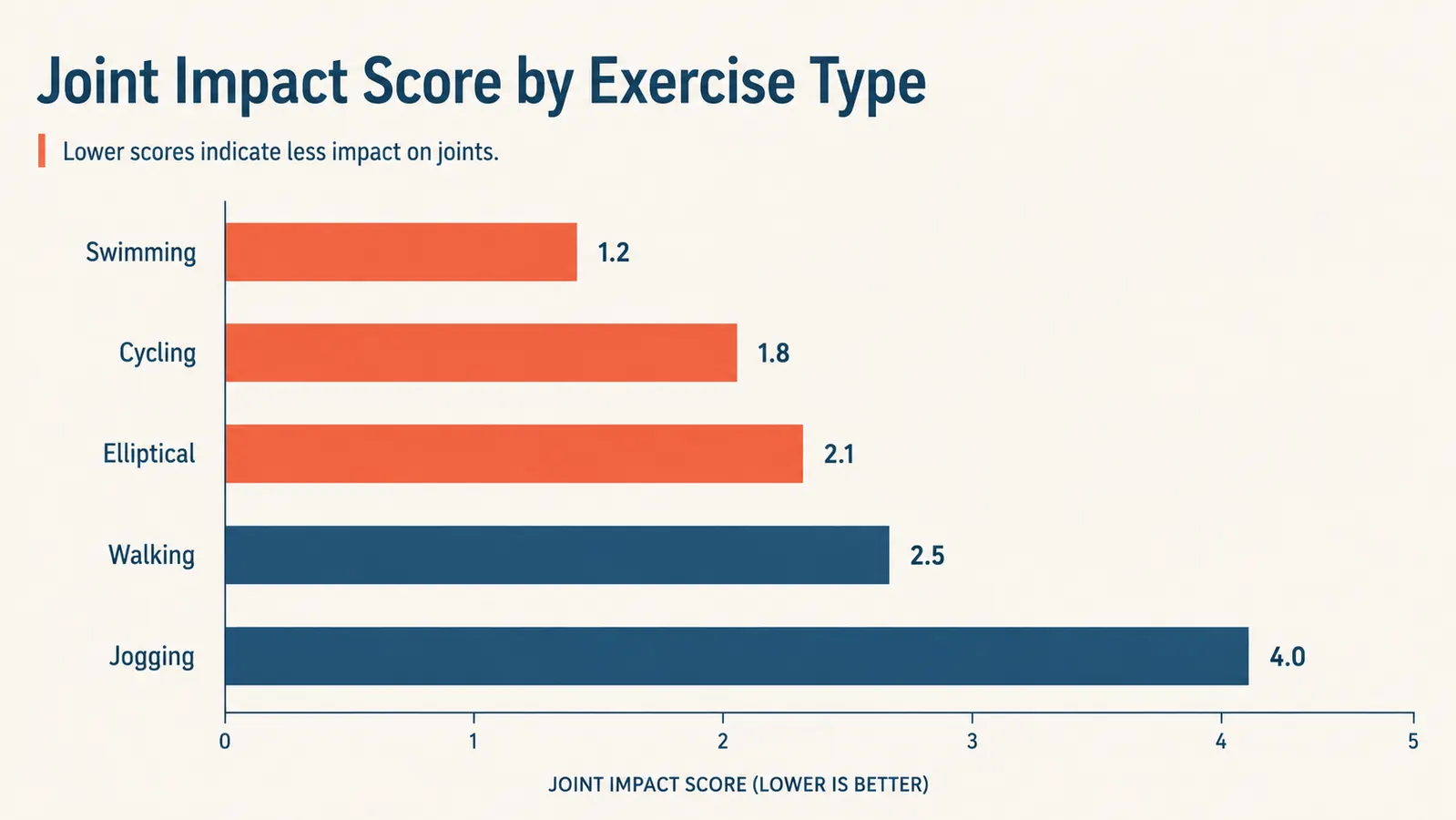
Full-depth squats giving you grief? Box squats to a high box, stopping before the point of pain, let you keep the pattern without the knee-grinding bottom range. Lunges hurting? Swap to a step-up onto a low platform, which is knee-friendly and actually harder on the glute. Running aggravating things? Cycling, swimming, or the elliptical machine loads the joint very differently and often feels completely fine when running does not. The goal is to keep training the muscles around the knee, because a stronger quad and glute is one of the best long-term fixes for knee pain that exists.
I kept a simple note on my phone for a few weeks listing which exercises bothered my knee and what I swapped them to. That little log helped me find the pattern fast. For me, it was any exercise with my knee traveling forward past my toes under load. Modifying the movement to keep my shin more vertical took about 80 percent of my discomfort away within three weeks.
Step 3: Add Compression While You Train
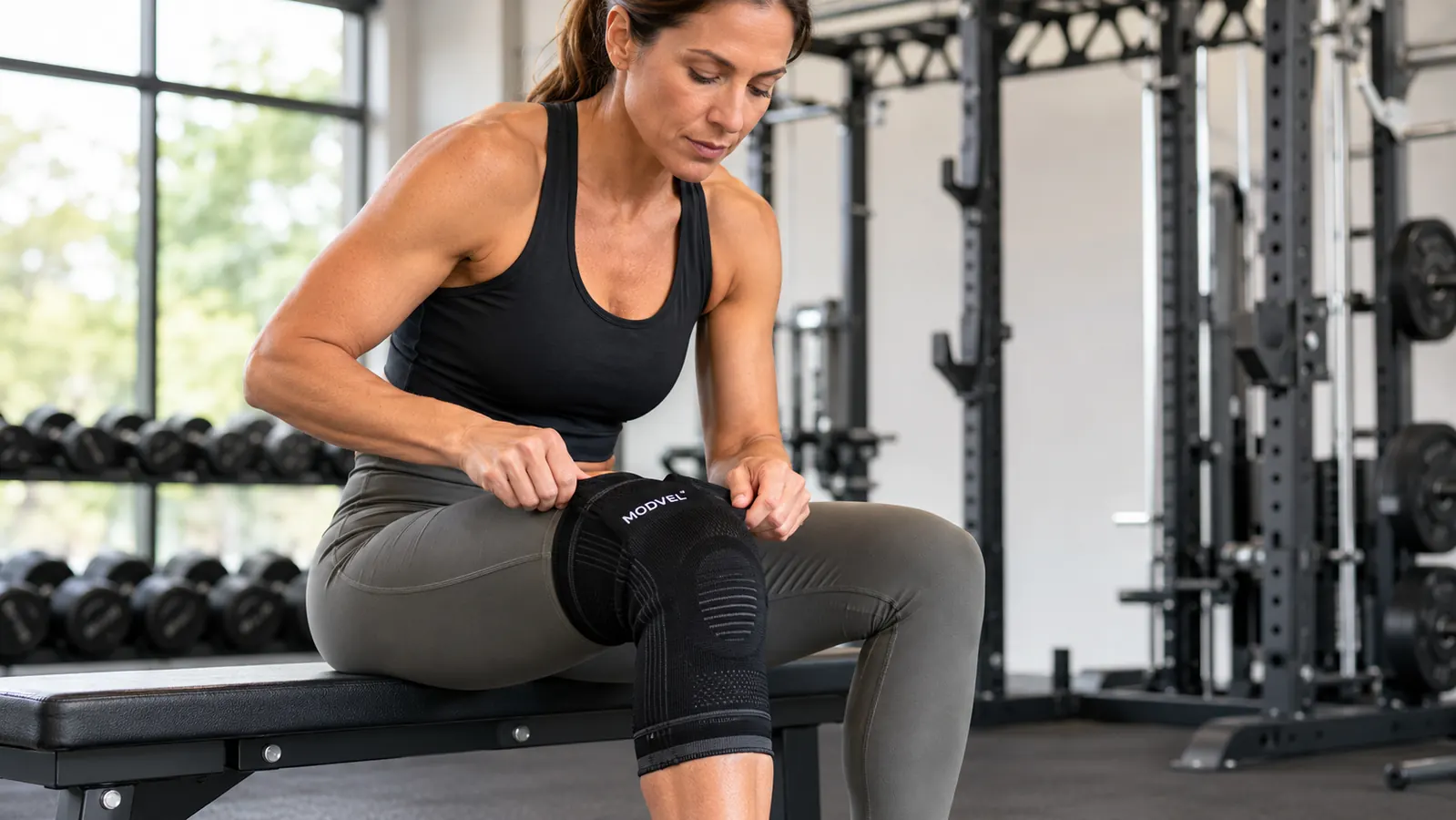
This is where the Modvel knee sleeve entered my life, and I'll be straight with you: I was skeptical. I'd tried a drugstore compression wrap that bunched up and slid down inside of ten minutes. I expected more of the same. But the Modvel sleeve, which is a proper knit compression sleeve with silicone grip strips around the top and bottom, stayed exactly where I put it for the entire workout. No bunching, no rolling, no mid-lunge readjusting.
The compression itself does two things. First, it increases proprioception, meaning your brain gets better feedback about where your knee is in space, which helps you move it more carefully and consistently. Second, it provides mild support to the surrounding soft tissue, which takes some of the stress off the joint when you're pushing through a workout. It won't fix an actual injury. But for the kind of aching, grumbling knee pain that plagues active people in their late thirties and forties, compression during training makes a real and noticeable difference.
Because the Modvel comes in a 2-pack, I stopped rationing them. One stays in my gym bag and one lives next to my yoga mat at home. I size up on compression sleeves compared to what I think I need, because a sleeve that's too tight creates its own problems and can cut off circulation if you're in it for more than an hour. Modvel's sizing chart runs true, and their customer reviews are full of people talking about the sizing in detail, which is helpful before you order.
Step 4: Strengthen the Muscles That Support Your Knee
The knee is a hinge joint that depends almost entirely on the muscles around it for stability. The quad, hamstring, glute, and even the calf all have roles to play in keeping the knee tracking properly and absorbing load correctly. When any of those muscles are weak or out of balance, the knee itself takes more stress than it's designed for, and pain follows.
I added three exercises to my week specifically to address this, and they made more long-term difference than anything else on this list. Terminal knee extensions with a resistance band, which isolate the quad in its last 30 degrees of extension. Clamshells with a light loop band, which strengthen the hip abductors and take stress off the inner knee. And single-leg calf raises, because the calf has more to do with knee load absorption than most people realize. None of these are exciting. All three of them took my left knee from 'nagging problem' to 'I mostly forget about it' over about six weeks of consistent work, three days per week.
If you've been living with knee pain long enough to start searching for articles like this one, you've probably been hoping for a different answer, something quicker. I get it. But the compression sleeve gives you the short-term relief to keep training, and the strengthening work gives you the long-term fix so you need the sleeve less over time. Both matter.
The sleeve gave me the short-term relief to keep training. The strengthening work gave me the long-term fix so I needed the sleeve less over time. Both matter, and neither one replaces the other.
Step 5: Cool Down With Intention and Monitor the Response
How your knee feels in the 24 hours after a workout tells you more than how it feels during one. I learned this the hard way by pushing through sessions that felt okay in the moment, only to wake up with a knee so stiff I could barely get down the stairs to make breakfast. Paying attention to the after-response is the fastest way to dial in which loads your knee can handle right now and which ones you need to back off.
A good cool-down for a sore knee takes about ten minutes. Five minutes of easy walking to flush the joint. Then a set of seated quad stretches, a calf stretch against the wall, and a figure-four hip stretch on the floor. If the knee feels warm or puffy after training, ten minutes of ice in a ziplock bag wrapped in a dish towel is your friend. Skip the heating pad for post-workout inflammation. Heat is better pre-workout, when the goal is to bring blood in. Ice is better post-workout, when the goal is to reduce reactive swelling.
The rule I give myself is simple: if my knee is more than 'a little achy' two hours after a workout, or if it's still bothering me the next morning, I take a day off from lower-body training and revisit what I did. One pain-free modification day now is worth a week of forced rest later. I've had to remind myself of that more than once.
What Else Helps
Beyond the five steps, a few other things have made my knee situation easier to manage. Magnesium glycinate before bed reduced the overnight aching that used to wake me up during bad weeks. Electrolytes before and during longer training sessions helped with the cramping and tightness that often preceded flare-ups. I also started paying more attention to my footwear, both at the gym and for work. Showing houses in flat flats with zero cushioning is hard on the whole kinetic chain. Swapping to a proper walking shoe with a cushioned midsole cut my daily ache in half, no joke.
One more thing worth mentioning for anyone who's been dealing with knee pain for more than a few months and getting nowhere: get imaging done if you haven't already. A basic X-ray rules out structural issues, and an MRI tells you whether there's soft tissue involvement. My imaging came back clean, which was both reassuring and a little frustrating, because 'nothing's wrong but it still hurts' is its own category of annoying. But knowing there was no torn meniscus let me train with more confidence and less fear. If you haven't ruled out the structural stuff, that's worth doing before you dive into a rehab plan.
If you want a deeper dive into whether compression support is right for your specific situation, the article on the 10 signs you need knee compression support is worth reading. And if you're trying to decide which Modvel sleeve size to order, the full review covers the sizing details and what two months of daily use actually looked like.
Ready to stop babying your knee and get back to training? Start with compression support that actually stays put.
The Modvel 2-Pack has 78,148 reviews and a 4.4-star rating. It's one of the most-reviewed compression sleeves on Amazon for a reason. Budget-priced for two means you can keep one everywhere you work out.
Amazon Check Today's Price on Amazon →